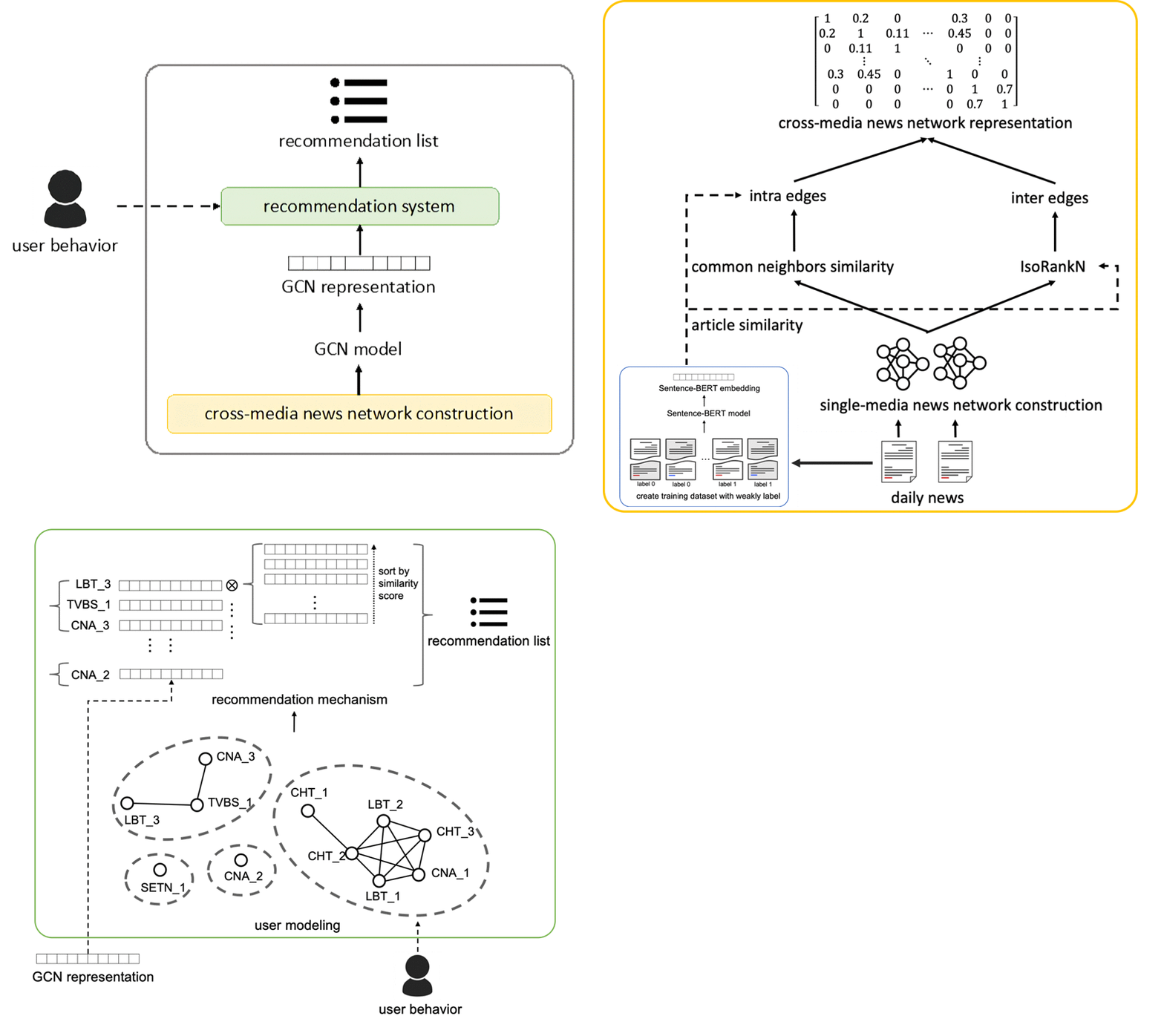
 Nowadays online recommendation systems aim at offering a wide range of up-to-date information and providing personalized recommendations since people usually read news shortly. However, existing studies/systems either recommend news from the same media platform or just bring multiple sources of information together without considering readers’ preferences. Sometimes the former may lead to the media bias problem or even the fake news spread.
Based on our previous network-alignment approach, we propose a novel cross-media news recommendation system, which can provide articles with diverse perspectives from different news media and preserve both document and topological information based on the inter- and intra-connections between news articles. Moreover, according to user browsing history, the recommendations made by the system can not only help readers understand their personalized interested news from a broader overview but mitigate the media bias problem. Empirical experiments with real users demonstrate the effectiveness of our system, and reveals the personalization and diversity of the recommendations.
On the other hand, in systems biology, a fundamental goal of biology is to understand the cell as a system of interacting components and especially, almost every biological process is mediated by a network of molecular interactions. In particular, there has been a considerable amount of research devoted to the discovery and exploration of interactions between proteins in the last decade. Since many cellular activities are a result of protein interactions, proteins often interact with other proteins to perform their functions, and form a complex biological system, i.e., a protein-protein interaction (PPI) network. This powerful way of representing and analyzing the vast corpus of PPI data describes the interaction relationship among proteins in a cell. Furthermore, knowledge about the topology of a PPI network in one organism can yield insights about not only the networks of similar organisms, but also the function of their components. Hence comparison between protein interaction networks is becoming central to systems biology. We have collaborated with the MIT team and developed global alignment algorithms for performing comparative analysis of multiple biological networks. (more details)

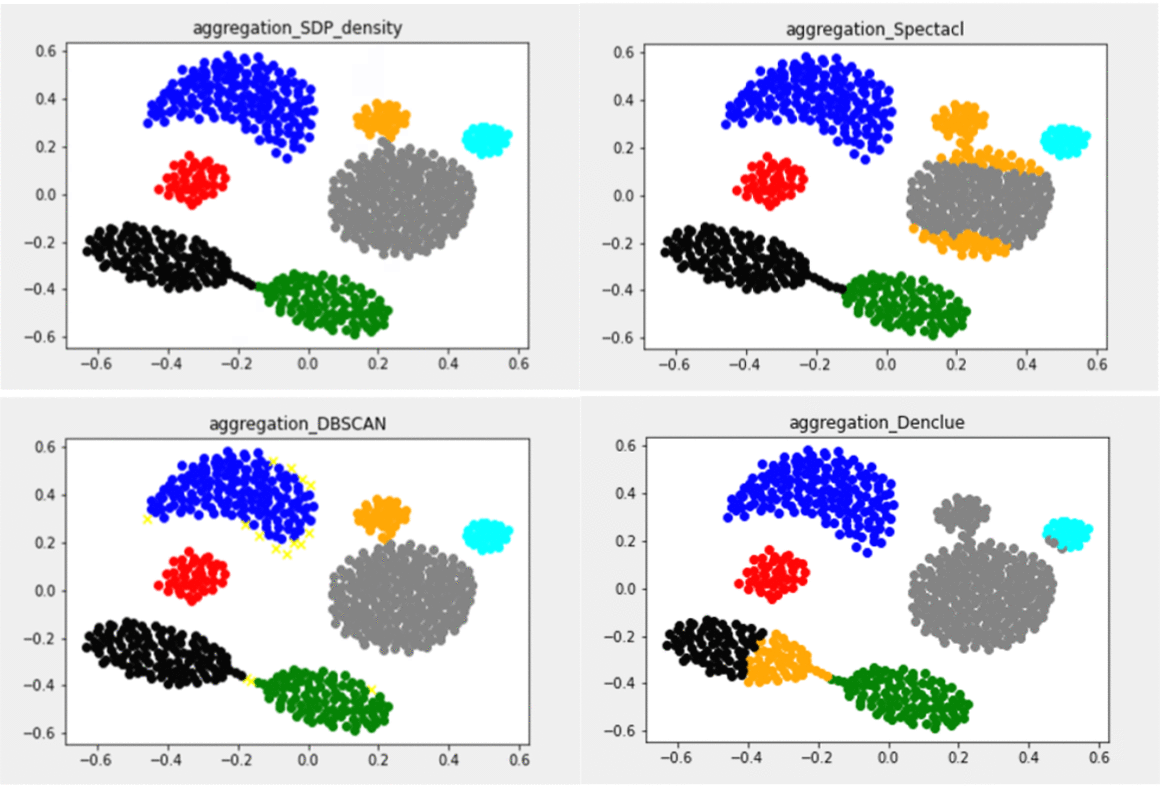
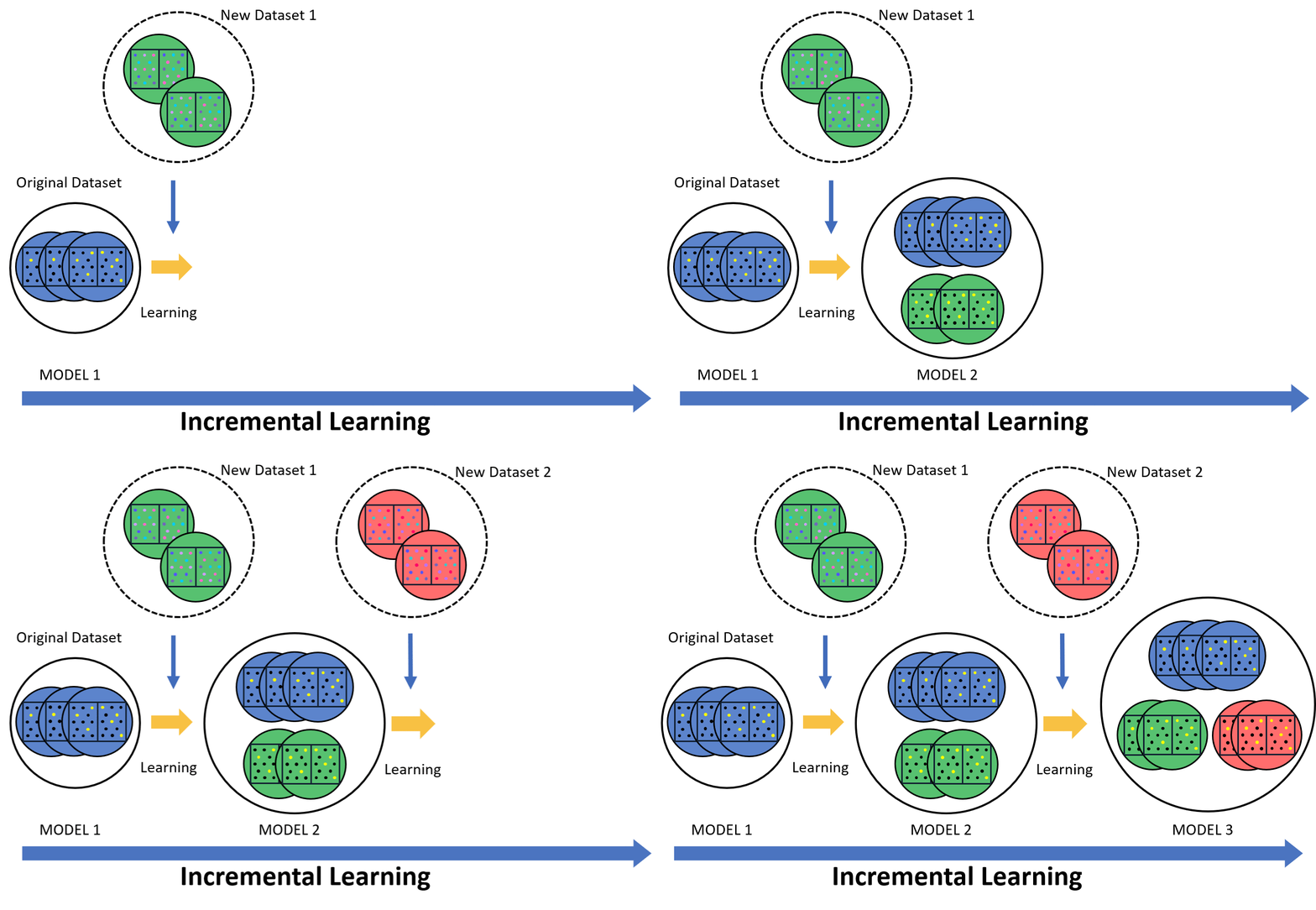
 Welcome to visit Dr. Chung-Shou Liao’s lab! Our research mainly focuses on designing efficient algorithms that can be used to solve difficult combinatorial optimization problems from real applications. Our lab has developed approximation algorithms with theoretical analysis for well-known hard problems such as online shortest path, facility location, domination, and scheduling and packing problems. Other areas of interest include computational geometry, graph theory, and machine learning. In particular, we have also extended our study to systems biology: we have proposed graph-theoretic algorithms for global alignment between multiple biological networks and conducted comparative analysis across species, which can find real applications to social networking and recommendation systems. In recent years, we put more attention on dynamic and online algorithms for the fundamental problems such as data clustering and classification, as well as their applications to AI manufacturing.